
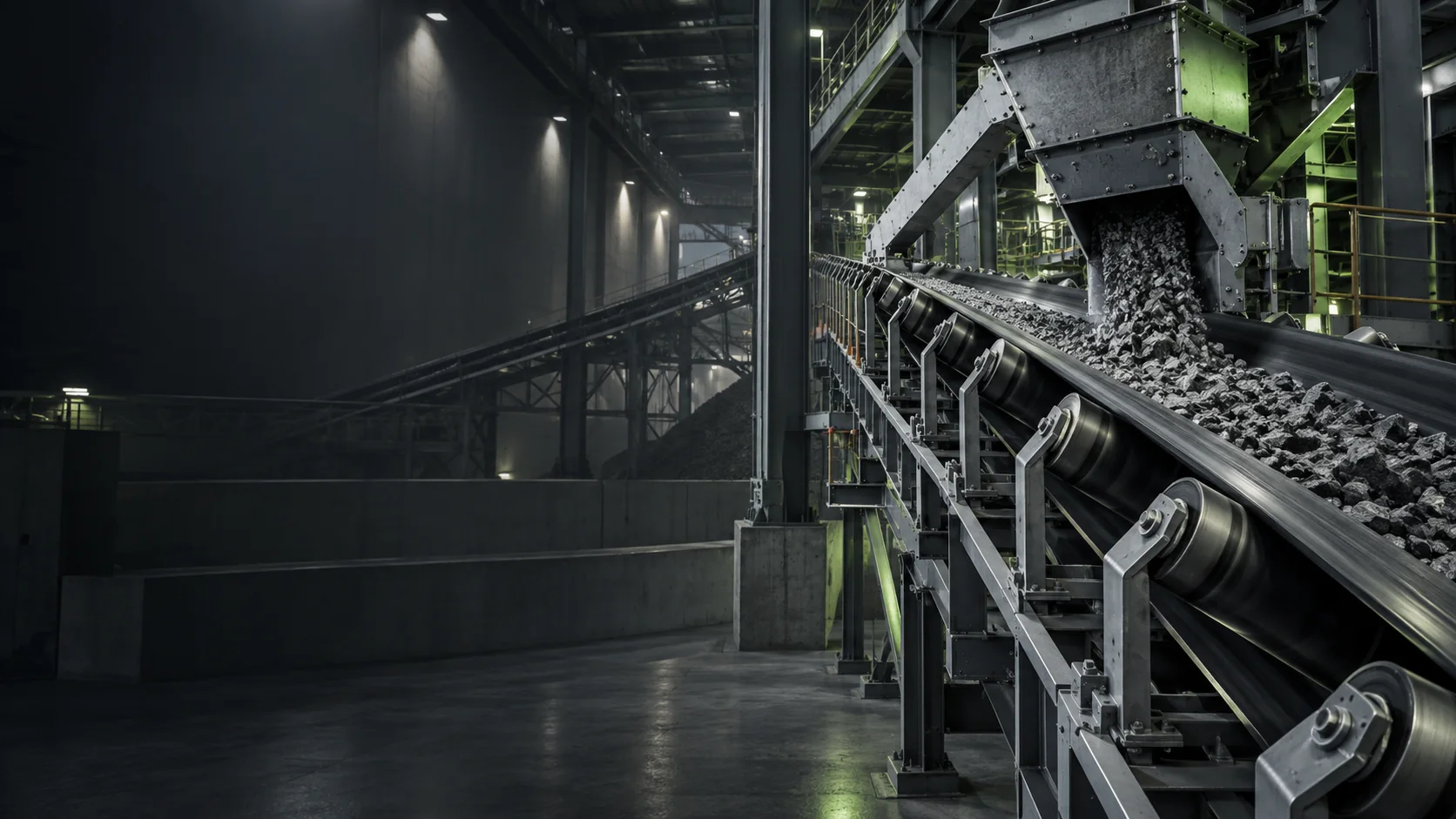
Make material
flow work better.
Greening engineers and supplies equipment and material-handling systems for demanding industrial processes. Every solution begins with the material, the duty and the site.
Discuss your project↗Start with the process.
Engineer the right flow.
Handling bulk material is never one-size-fits-all. Material properties, throughput, layout and operating conditions shape each decision — from the first study to the equipment supplied.
How we work02 / WHAT WE DO
From the first line
to the working line.
03 / THE SYSTEM VIEW
The interface
is the work.
A reliable system depends on more than a single machine. We look at how material is received, moved, controlled and delivered within the whole process.
Explore systems04 / PROVEN APPLICATIONS
Selected works,
proven on site.
From high-temperature clinker overland routes to automated biomass reclaim and blast furnace modernisation — material handling systems engineered from the process reality.
Explore all works & case studies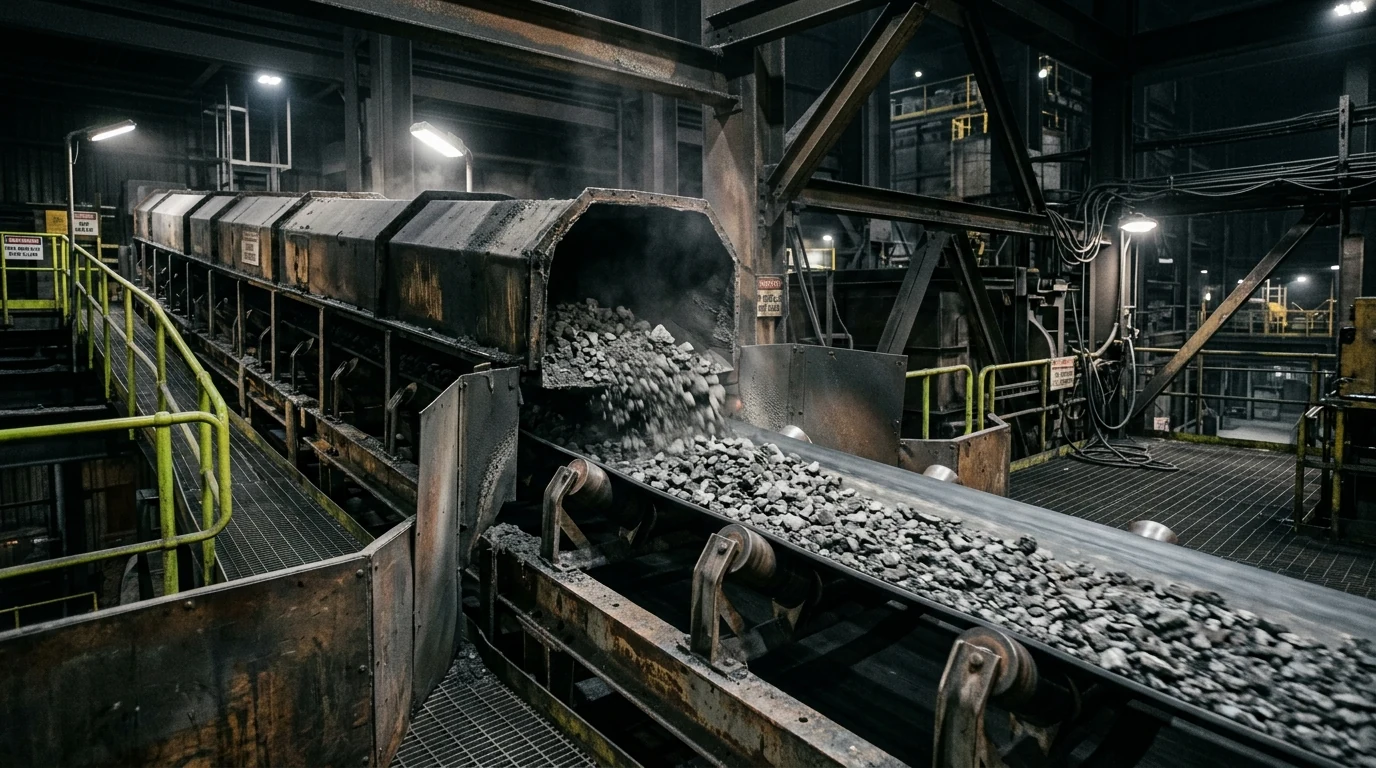 Cement · Hot Clinker · 450 t/h
Clinker Overland & Dome Reclaim
Multi-point dome storage discharge with manganese wear liners and rock-box transfer chutes.
View case study ↗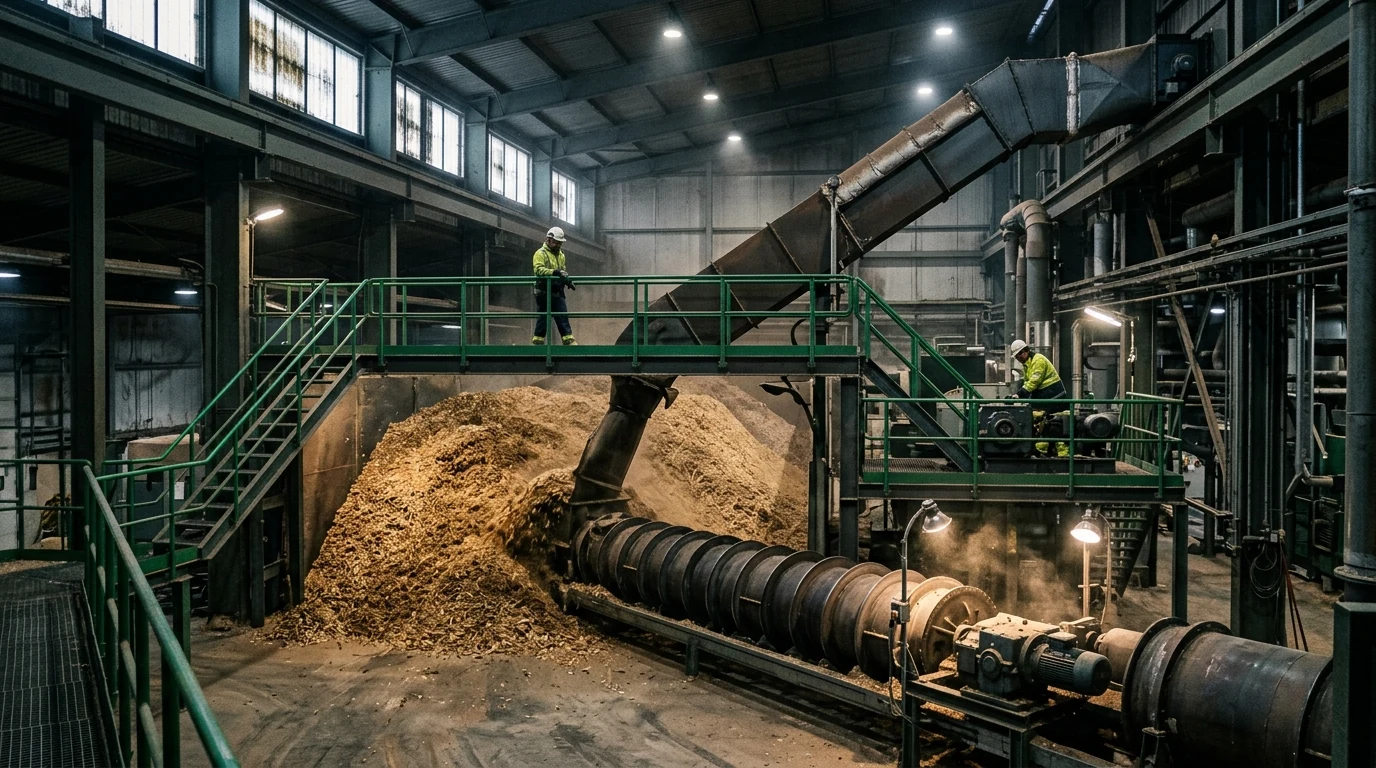 Biomass Energy · Wood Chips · 120 m³/h
Boiler Feed & Anti-Bridging Reclaim
Push-floor storage and heavy-duty shaftless screws delivering reliable flow of moist forestry chips.
View case study ↗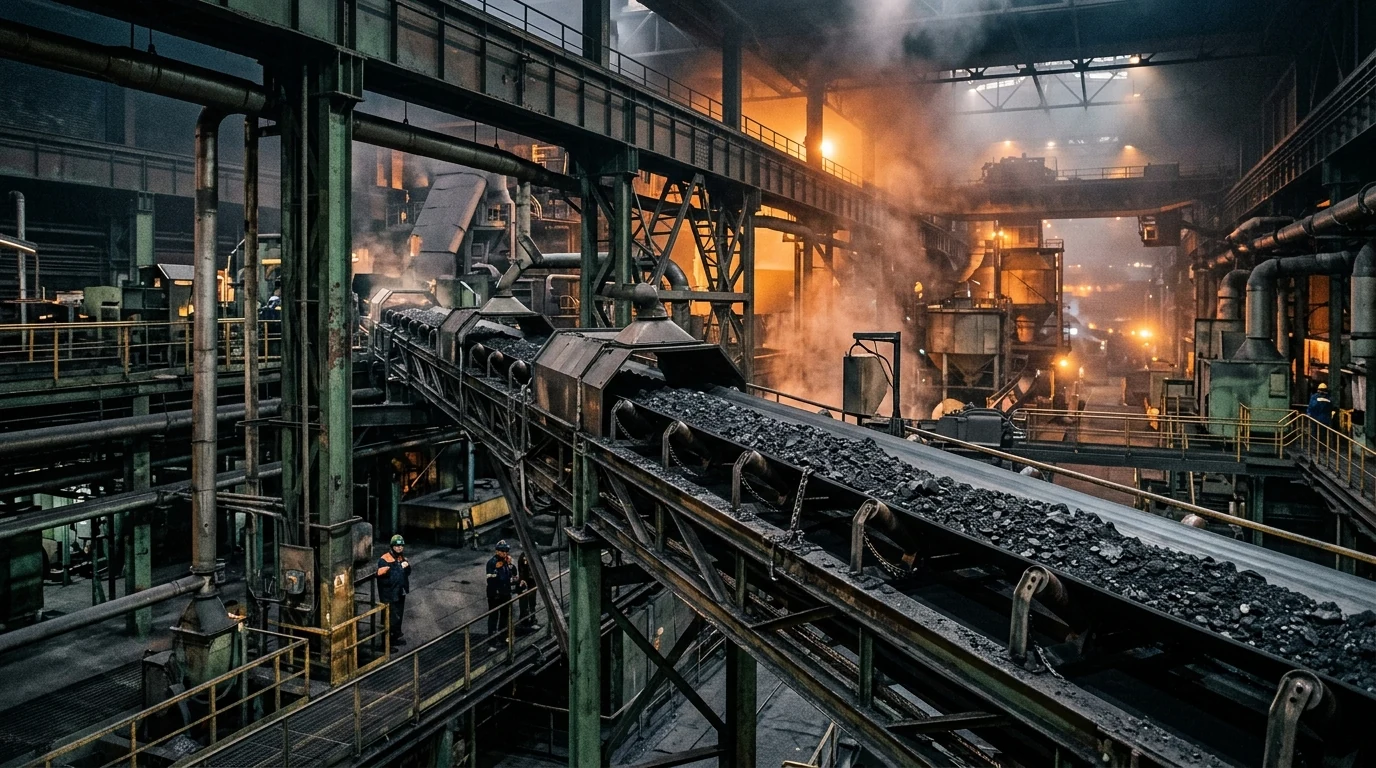 Steelworks · Sinter & Coke · 800 t/h
Blast Furnace Line Modernisation
Revamping a 40-year gantry with garland suspended idlers, structural reinforcement, and dynamic scrapers.
View case study ↗05 / HOW A PROJECT RUNS
Four stages,
one design basis.
The order rarely holds perfectly, but every project passes through the same questions.
Study
Material, duty, site and the open questions become a design basis.
02Design
Layouts, models and drawings the project team can review and build from.
03Supply
The specified package, its components and the spares that go with it.
04Commission
Assembly, commissioning and support on site — where within the agreed scope.
06 / FROM THE DRAWING BOARD
Notes we'd send
before a first call.
The Transfer Point is where we write down the engineering that decides projects: why silos stop flowing, which conveyor fits which duty, what to send before asking for a quote.
How to specify a bulk material conveying system
A step-by-step guide to specifying a bulk material conveying system: material data, duty, route, conveyor type, transfer points, drives and controls — and what to put in the enquiry so the answer is useful.
8 min read↗Storage & flowWhy material stops flowing: bridging, ratholing and mass flow
Why a silo or hopper stops discharging — arching (bridging), ratholing, flushing and segregation — and how outlet size, hopper angle, wall friction and the feeder decide whether material flows.
7 min read↗ConveyingTransfer point design: dust, spillage and chutes
Why conveyor transfer points make dust and spillage, what the material stream does when it leaves the head pulley, and how chute geometry, loading, skirting and sealing bring it under control.
7 min read↗07 / WHERE WE WORK
Built for demanding
industrial contexts.
From minerals and energy to cement and biomass, each environment brings different materials, constraints and maintenance realities.
HAVE A MATERIAL FLOW CHALLENGE?
Let's look at
what it needs.
Tell us about the material, capacity, operating conditions and project stage.